
AI replacing human drivers: The Full Impact
The conversation around AI replacing human drivers has moved from the pages of science fiction to the forefront of economic and technological debate. This seismic shift, driven by advancements in autonomous vehicles and sophisticated AI driving systems, promises to redefine not just our highways, but our entire social and economic landscape. As driverless technology matures, understanding its full impact on jobs, safety, and daily life is more critical than ever.
This guide provides a comprehensive analysis of this transition. We’ll explore the core technologies making it possible, assess the real-world impact on jobs beyond just the trucking industry, and navigate the complex challenges that lie ahead on the road to a fully autonomous future.
The Unstoppable Rise of Autonomous Vehicles
The journey toward a driverless world has been decades in the making. What started as experimental projects in university labs has now blossomed into a multi-billion dollar industry with major players like Tesla, Waymo, and Cruise deploying increasingly capable vehicles on public roads.
From Sci-Fi to Reality: A Brief History
The concept of self-driving cars is not new, but the convergence of powerful computing, advanced sensors, and massive datasets has accelerated progress exponentially. Early prototypes were limited to controlled environments, but today’s autonomous vehicles can navigate complex urban streets, bustling highways, and challenging weather conditions with an ever-improving degree of reliability.
Understanding the Levels of Driving Automation
To grasp the timeline of this revolution, it’s crucial to understand the internationally recognized SAE Levels of Driving Automation. These levels provide a clear framework for the capabilities of autonomous systems.
- Level 0: No Automation. The human driver performs all driving tasks.
- Level 1 (Driver Assistance): The vehicle can assist with one task, like cruise control or lane-keeping.
- Level 2 (Partial Automation): The vehicle can control steering and acceleration/deceleration, but the human must remain engaged. This is common in many new cars today.
- Level 3 (Conditional Automation): The vehicle can handle all aspects of driving in certain conditions, but the human must be ready to take over.
- Level 4 (High Automation): The vehicle can perform all driving tasks within a specific operational design domain (e.g., a geofenced urban area).
- Level 5 (Full Automation): The vehicle can perform all driving tasks under all conditions a human could.
The industry is currently focused on perfecting Level 4 technology for commercial applications like robot taxi services and long-haul trucking, which represents the most immediate frontier for AI replacing human drivers.
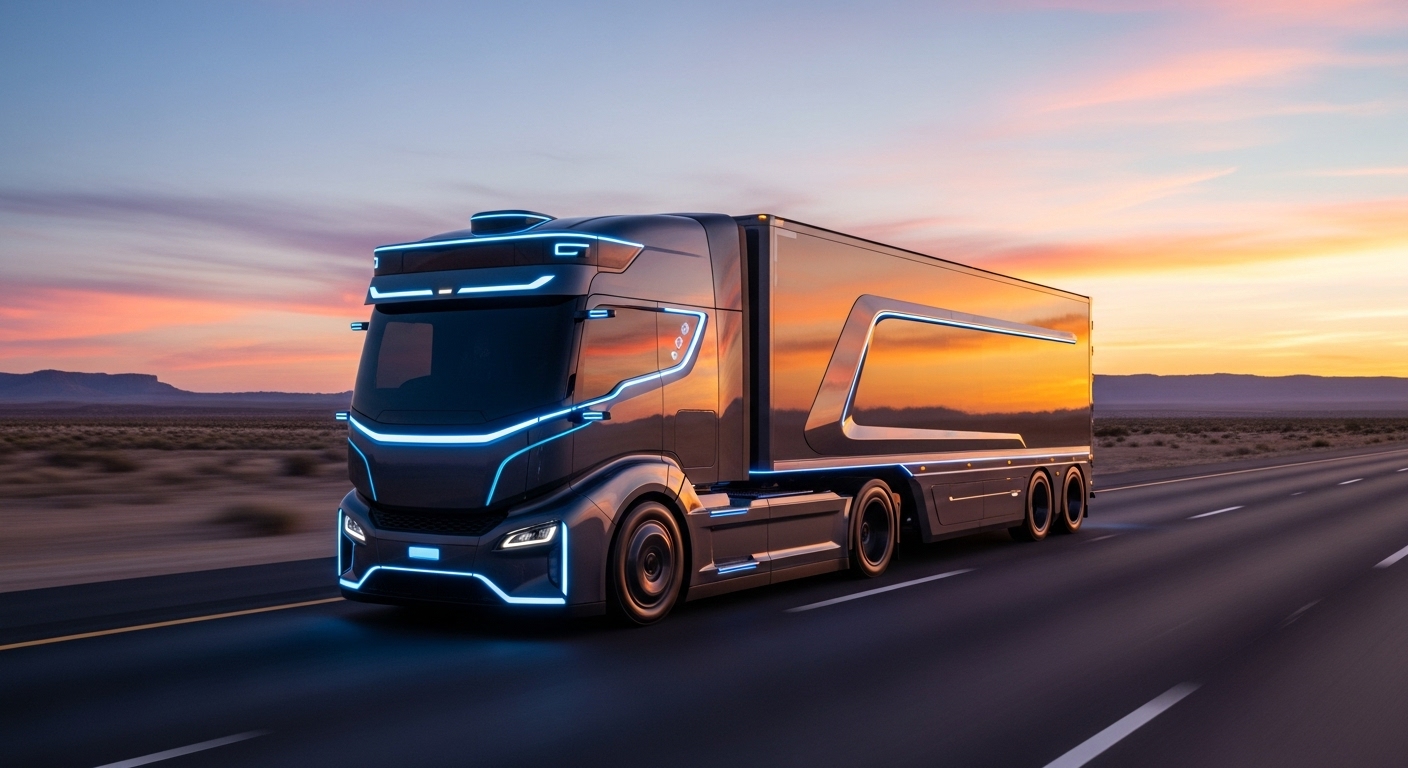
The Core Technology: How AI Is Replacing Human Drivers
Autonomous driving is not a single technology but a symphony of integrated systems working in concert. The vehicle’s ability to perceive, think, and act depends on a sophisticated suite of hardware and software components.
Sensor Fusion: The Eyes and Ears of the Machine
An AI driver ‘sees’ the world through multiple sensor types, each with unique strengths. This redundancy is key to safety and reliability.
- Cameras: Provide high-resolution color images, excellent for identifying traffic lights, signs, and lane markings.
- LiDAR (Light Detection and Ranging): Uses laser pulses to create a precise 3D map of the surroundings, excelling at object detection and distance measurement.
- Radar: Works well in adverse weather conditions like rain and fog, tracking the speed and distance of other vehicles.
Data from all these sensors is fused together, creating a comprehensive, 360-degree model of the environment that is far more detailed than what a human driver can perceive.
Machine Learning and Predictive Decision-Making
At the heart of an autonomous vehicle is its AI brain. This system uses advanced machine learning models, trained on millions of miles of driving data, to interpret the sensor data. It identifies pedestrians, cyclists, and other vehicles, predicting their likely movements and making split-second decisions to navigate safely and efficiently. You can learn more about the challenges of AI safety at a reputable source like the MIT Technology Review.
Economic Shockwave: The Impact of AI Replacing Human Drivers on Jobs
The most significant societal debate centers on job displacement. While trucking is often the focus, the impact of AI replacing human drivers will be felt across numerous sectors of the economy.
Beyond Trucking: Who Is Most at Risk?
Millions of Americans earn a living behind the wheel. The transition to autonomous technology will affect a wide array of professions.
- Truck Drivers: Long-haul trucking is a prime candidate for early automation due to predictable highway environments.
- Taxi and Ride-Share Drivers: Companies like Waymo and Cruise are already operating robot taxi services in select cities.
- Delivery Drivers: From local food delivery to last-mile package services, automation threatens a massive workforce.
- Bus and Public Transit Operators: Automated shuttles and buses are being tested in cities worldwide.
A Path Forward: Retraining and New Opportunities
While job displacement is a serious concern, the rise of autonomous technology will also create new roles. These include AI fleet managers, remote vehicle operators, sensor maintenance technicians, and software developers specializing in autonomous systems. Proactive government and corporate investment in retraining programs will be essential to manage this transition smoothly. To see what the government is planning, check reports from the U.S. Department of Transportation.
Comparing Human vs. AI Driving Capabilities
To understand why this shift is happening, it’s useful to compare the inherent capabilities and limitations of human and AI drivers directly.
| Feature | Human Driver | AI Driver |
|---|---|---|
| Awareness | Limited field of view, requires focus | 360-degree, constant sensor monitoring |
| Reaction Time | ~1.5 seconds | Milliseconds |
| Endurance | Prone to fatigue, requires breaks | Can operate 24/7 without rest |
| Distractions | Susceptible to phones, eating, etc. | Immune to distractions |
| Performance | Variable, affected by emotion/health | Consistent and predictable |
| Adaptability | Excellent at novel, unexpected events | Struggles with ‘edge cases’ not in data |
Navigating the Hurdles to a Driverless Future
Despite rapid progress, the road to full automation is paved with significant challenges that must be overcome before we see widespread adoption.
Regulatory and Legal Challenges
Governments are scrambling to create legal frameworks for autonomous vehicles. Key questions remain unanswered: Who is liable in the event of a crash involving an AI driver—the owner, the manufacturer, or the software developer? Establishing clear laws and regulations is a top priority.
Key Takeaway: The technological challenge of AI replacing human drivers is matched by an equally complex legal and ethical challenge. Solving one without the other is not a viable path forward.
Public Perception and Trust in AI Driving Systems
Perhaps the biggest hurdle is public trust. High-profile accidents involving semi-autonomous systems have fueled skepticism. Gaining widespread public acceptance will require a proven track record of safety that is demonstrably better than human drivers, along with transparent communication from developers. Our internal research on the future of automation in industries shows public trust is a key adoption factor.

Conclusion: A Future in Motion
The era of AI replacing human drivers is no longer a distant possibility; it is an unfolding reality. This technological evolution holds the promise of a safer, more efficient, and more accessible transportation system. It offers solutions to problems like traffic congestion and human error, which accounts for over 90% of all traffic accidents.
However, this transition also presents profound economic and social challenges, primarily concerning the millions of individuals whose livelihoods depend on driving. Navigating this future successfully requires a proactive and empathetic approach. By investing in education, creating robust social safety nets, and fostering a public dialogue, we can harness the incredible benefits of autonomous technology while mitigating the risks of this historic disruption. The journey ahead is complex, but the destination is a world in which transportation is fundamentally transformed for the better. If you have questions about this transformation, feel free to contact us for more information.
FAQ
When will AI fully replace human drivers?
A full Level 5 replacement across all vehicle types and conditions is likely decades away. However, we will see AI replacing human drivers in specific sectors like long-haul trucking and geofenced urban taxi services much sooner, with significant deployments expected within the next 5-10 years.
Is AI replacing human drivers a good thing for safety?
The primary motivation for autonomous technology is safety. AI drivers are not susceptible to distraction, fatigue, or impairment. While the technology is still being perfected, the long-term potential is to drastically reduce the more than 40,000 annual traffic fatalities in the United States alone.
What will happen to all the truck drivers?
This is a critical concern. The transition will likely be gradual, starting with ‘hub-to-hub’ highway routes where AI handles the long-haul portion and human drivers manage complex urban driving at the beginning and end of trips. This creates a window for retraining and transitioning the workforce to new roles in logistics, fleet management, and maintenance.
Can self-driving cars handle bad weather like snow or heavy rain?
Adverse weather remains one of the biggest challenges for autonomous vehicles. Heavy rain, snow, or fog can interfere with sensors like cameras and LiDAR. While systems are improving with better sensor technology and AI algorithms, reliably navigating all weather conditions is a key hurdle to achieving full Level 5 automation.