
Automation Risk and Future of Work: A Guide
Understanding the complex relationship between Automation Risk and Future of Work is no longer a futuristic debate; it’s a present-day necessity for professionals across all industries. As artificial intelligence and machine learning technologies evolve at an unprecedented pace, they are fundamentally reshaping job roles, creating new opportunities, and introducing significant challenges. This guide provides a clear, balanced perspective on navigating this transformation, focusing on both the risks and the actionable strategies to thrive.
Our world is being redefined by technology. While headlines often focus on job displacement, the more nuanced reality involves a profound shift in how we work, collaborate, and create value. The key is to adapt by cultivating uniquely human skills while leveraging AI as a powerful tool for augmentation, not just replacement.
What is Automation Risk in the Modern Workplace?
Automation risk refers to the potential for a job, or the tasks within it, to be performed by technology like robots or AI software, potentially leading to job displacement for human workers. It’s a spectrum, not an absolute.
Defining Technological Unemployment
Technological unemployment is job loss caused by technological change. Historically, this has been a recurring theme, from the industrial revolution to the computer age. Today, AI’s ability to tackle cognitive tasks, not just manual ones, represents a new frontier in this ongoing evolution.
The Core of the Automation Risk and Future of Work Debate
At the heart of the Automation Risk and Future of Work discussion is the question of which tasks are most susceptible. The consensus points towards roles characterized by routine, repetition, and predictability. This includes both blue-collar manufacturing jobs and white-collar administrative work.

High-Risk vs. Emerging-Opportunity Sectors
Understanding where the risk is highest allows individuals and organizations to pivot strategically. It’s not just about job loss, but about job transformation. Many roles will not disappear but will instead evolve to incorporate AI tools.
Industries Facing Significant Transformation
Certain sectors are on the front lines of the automation wave. Here are a few examples:
- Manufacturing and Assembly: Repetitive physical tasks are prime candidates for robotic automation.
- Transportation and Logistics: The rise of autonomous vehicles and drone delivery systems poses a direct risk to driving and delivery roles.
- Administrative and Data Entry: AI can process and organize vast amounts of information faster and more accurately than humans.
- Customer Service: Basic inquiries are increasingly handled by chatbots, shifting human agents to more complex problem-solving.
A Comparative Look at Job Sector Risk
To better visualize the landscape, here is a breakdown of job characteristics and their relative automation risk.
| Characteristic | Automation Risk Level | Example Roles |
|---|---|---|
| Repetitive Physical | High | Assembly Line Worker, Warehouse Packer |
| Data Processing | High | Data Entry Clerk, Loan Officer |
| Predictable Tasks | High | Fast Food Cook, Cashier |
| Complex Problem-Solving | Low | Management Consultant, Scientist |
| Creativity & Strategy | Low | Graphic Designer, Marketing Director |
| Empathy & Care | Low | Nurse, Therapist, Teacher |
The Future of Work: A Shift to Human-AI Collaboration
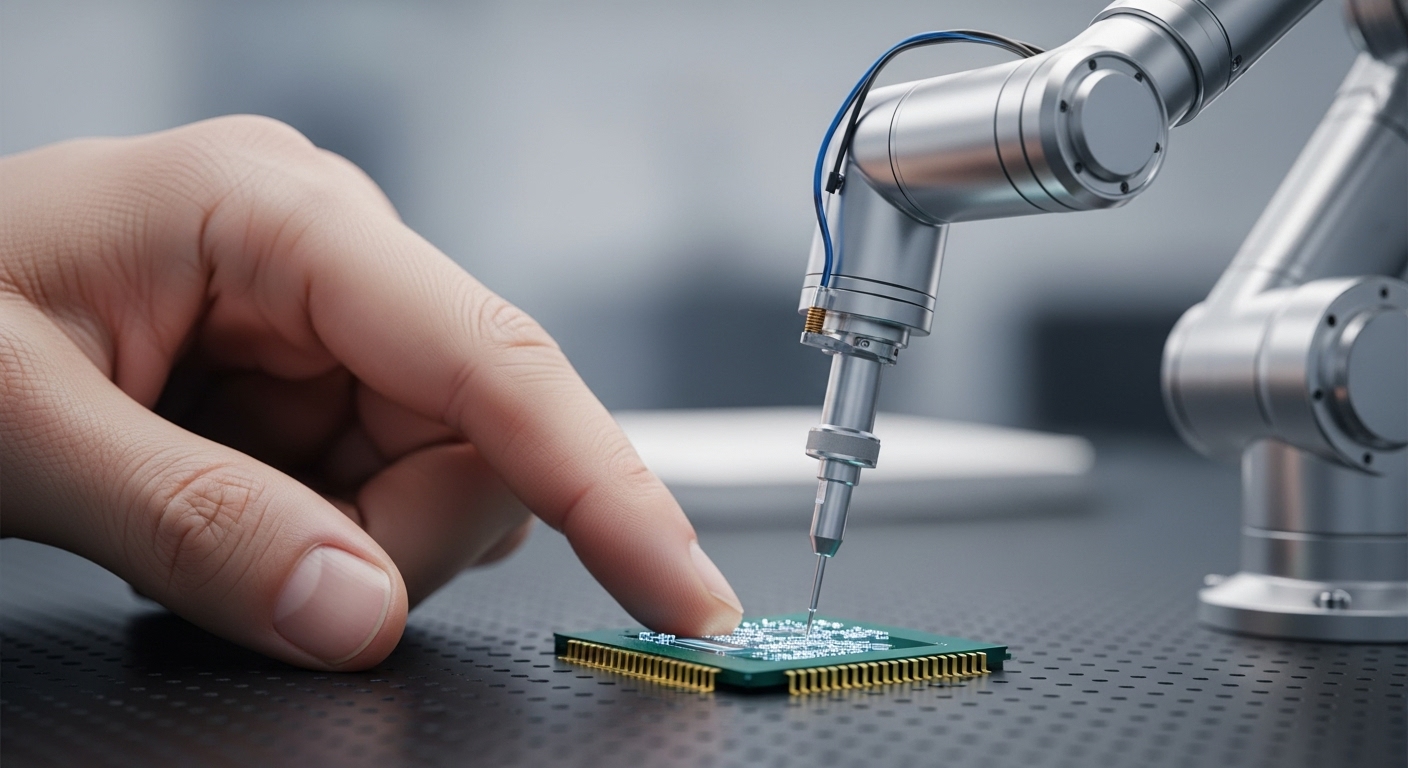
Viewing automation solely through the lens of replacement is a limited perspective. The most significant opportunity lies in human-AI collaboration, where technology augments human capabilities, leading to greater productivity and innovation.
AI as a Tool, Not a Replacement
Think of AI as the ultimate assistant. It can analyze massive datasets to provide insights for a financial analyst, scan legal documents for a lawyer, or identify potential issues in a manufacturing process for an engineer. This frees up human professionals to focus on higher-level strategy, creativity, and interpersonal communication—tasks where humans still excel.
Key Takeaway: The goal isn’t to compete with AI but to collaborate with it. Focus on developing skills that complement artificial intelligence, such as critical thinking, emotional intelligence, and complex problem-solving. This is the cornerstone of thriving in the future of work.
Examples of Successful Human-AI Partnerships
We are already seeing this collaborative future take shape:
- Healthcare: AI algorithms analyze medical images like X-rays and MRIs to help radiologists detect diseases earlier and more accurately.
- Finance: Robo-advisors manage investment portfolios based on user-defined goals, while human advisors handle complex financial planning and client relationships.
- Software Development: AI-powered tools suggest code completions, identify bugs, and automate testing, allowing developers to build better software faster.
- Marketing: AI platforms analyze consumer behavior to personalize campaigns, freeing up marketers to focus on creative strategy and brand building.
Essential Skills to Thrive in an Automated World
The skills that were valuable a decade ago may not be sufficient for the future. Proactive upskilling is critical for career longevity.
The Rise of Uniquely Human Skills
The most resilient skills are those that are difficult to automate. These are often called ‘soft skills’ but are becoming essential power skills.
- Critical Thinking and Analysis
- Creativity and Innovation
- Leadership and Social Influence
- Emotional Intelligence
- Complex Problem-Solving
In-Demand Technical Competencies
Alongside human-centric skills, a foundational understanding of technology is becoming non-negotiable. For an in-depth look at technological trends, many turn to resources from organizations like the World Economic Forum.
- Data Literacy and Analytics
- AI and Machine Learning Principles
- Digital Marketing and SEO
- Cybersecurity Awareness

Navigating Your Career Amidst Automation Risk
Proactive career management is the best defense against automation risk. This involves a commitment to continuous education and adaptability.
Adopt a Lifelong Learning Mindset
Waiting to be told what to learn is a passive stance. Individuals must take ownership of their professional development. To learn more about adapting to technological change, see our guide on `/blog/embracing-workplace-technology`.
Strategies for Future-Proofing Your Career
- Conduct a Skills Audit: Regularly assess your current skills against future industry demands.
- Seek Out Stretch Projects: Volunteer for projects that expose you to new technologies and challenges.
- Build Your Network: Connect with professionals who are working with the technologies that are shaping your industry.
- Embrace Micro-Learning: Utilize online courses from platforms like Coursera or edX to gain specific, in-demand skills.
For a deeper dive, leading consulting firms like McKinsey & Company offer extensive research on the future of work. If you’re ready to take the next step in your career, explore our `/blog/future-proof-career-guide` for more resources.
Conclusion
The narrative of Automation Risk and Future of Work is not one of doom, but of dynamic change. While the risk of job displacement is real for roles based on routine tasks, the opportunities for growth, innovation, and value creation are immense. By focusing on human-AI collaboration, cultivating uniquely human skills, and embracing lifelong learning, we can navigate this transition and build a more productive and fulfilling future of work for everyone.
FAQ
What jobs are most at risk from automation?
Jobs that involve highly repetitive, predictable tasks—both manual and cognitive—are most at risk. This includes roles like data entry clerks, assembly line workers, telemarketers, and certain administrative positions. The key factor is routine, not necessarily the industry.
Will AI create more jobs than it destroys?
Historically, major technological shifts have ultimately created more jobs than they eliminated, though the transition can be difficult. New roles will emerge in areas like AI ethics, data science, robotics maintenance, and positions that require managing and working alongside AI systems. The net effect is a subject of ongoing economic debate.
How can I future-proof my career?
You can future-proof your career by focusing on skills that are difficult to automate: creativity, critical thinking, emotional intelligence, and complex problem-solving. Additionally, embrace lifelong learning to stay current with technology and proactively seek opportunities to work with new tools like AI in your current role.
What is the difference between automation and AI?
Automation refers to technology that performs a task with minimal human assistance. It typically follows pre-programmed rules. Artificial Intelligence (AI) is a broader concept where machines can simulate human intelligence, enabling them to learn, reason, and adapt. While all AI can be used for automation, not all automation uses AI.