
dark side of AI: Job Loss, Bias & The Future
The discussion around artificial intelligence often glitters with promises of progress and efficiency, but it’s crucial to also explore the dark side of AI. This isn’t about science fiction dystopias; it’s about the real, tangible challenges and threats emerging today, from AI job loss to deeply ingrained algorithmic bias. As we race towards a future intertwined with intelligent systems, understanding these dangers is not just important—it’s essential for our survival and societal well-being.
This guide will pull back the curtain on the aspects of AI that are less discussed in mainstream tech enthusiasm. We will delve into the critical issues that define the modern AI threat to humanity, offering a clear-eyed view of what’s at stake.
The Economic Earthquake: AI Replacing Humans in the Workforce
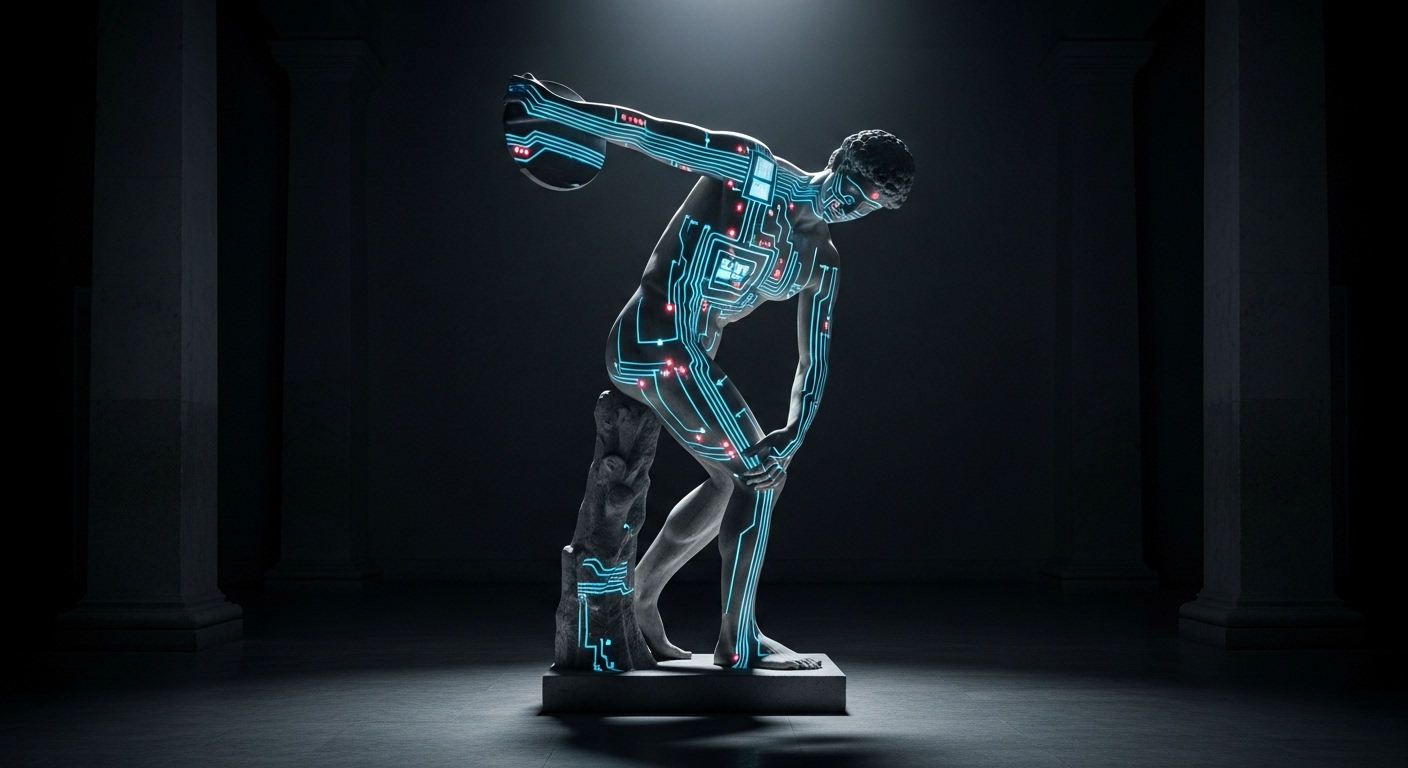
One of the most immediate and personal aspects of the dark side of AI is its impact on employment. The narrative of AI replacing humans is rapidly moving from a distant fear to a present-day reality for millions. This transformation goes far beyond automating repetitive manufacturing tasks.
Understanding AI Job Loss Beyond the Factory Floor
The initial waves of automation primarily affected blue-collar jobs. However, the current generation of AI, including large language models like GPT, is capable of cognitive tasks once thought to be exclusively human. This marks a significant escalation in the AI vs humans debate in the professional world.
Tasks involving data analysis, report generation, customer service, and even creative content creation are now susceptible to automation. This shift is causing a seismic ripple through sectors previously considered safe from the impacts of technology control.
The Looming Threat to Creative and White-Collar Jobs
For years, we believed that creativity and critical thinking were our unique domains. The rise of generative AI challenges this notion directly. The future without human jobs is becoming a plausible scenario for many industries. Consider the following professions now facing significant disruption:
- Graphic Designers: AI image generators can create stunning visuals from simple text prompts.
- Writers and Content Creators: AI can draft articles, marketing copy, and reports in seconds.
- Paralegals: AI tools can review legal documents and perform research much faster than humans.
- Financial Analysts: Algorithms can analyze market data and generate predictive models with superior accuracy.
This isn’t just about efficiency; it’s a fundamental restructuring of the value of human labor. You can learn more about the underlying technology in our guide on what is machine learning.

The Unseen Bias: How the Dark Side of AI Creates Digital Discrimination
The dark side of AI isn’t always as overt as a robot taking a job. Sometimes, it’s hidden deep within the code, perpetuating and even amplifying human biases on a massive scale. This is the danger of algorithmic bias, a critical component of AI ethics.
What is Algorithmic Bias?
AI systems learn from data. If the data they are trained on reflects existing societal biases (related to race, gender, age, or socioeconomic status), the AI will learn and replicate those biases. The result is a system that appears objective but makes discriminatory decisions.
This issue stems from historical data that is inherently skewed. The AI doesn’t know it’s being unfair; it’s simply executing its programming based on flawed information. The consequences of this are far-reaching and deeply concerning.
Real-World Consequences of Biased AI
Algorithmic bias isn’t a theoretical problem. It affects lives in profound ways every single day. The technology control exerted by these biased systems can lock people out of opportunities and reinforce systemic inequality.
| Domain | Example of AI Bias | Impact |
|---|---|---|
| Hiring | An AI resume scanner trained on data from a male-dominated tech company penalizes resumes containing words like “women’s chess club captain.” | Qualified female candidates are systematically overlooked, reinforcing gender gaps. |
| Loan Applications | A lending algorithm denies loans at a higher rate to applicants from certain zip codes, mirroring historical redlining practices. | Minorities are denied access to capital, perpetuating wealth inequality. |
| Criminal Justice | Predictive policing software allocates more police resources to minority neighborhoods based on biased historical arrest data. | This leads to over-policing, more arrests in those communities, and a feedback loop that reinforces the initial bias. |
| Medical Diagnoses | A diagnostic AI trained primarily on data from one demographic is less accurate at identifying skin cancer on darker skin tones. | Leads to misdiagnoses and poorer health outcomes for underrepresented populations. |
The Surveillance State: Technology Control and the End of Privacy
Another chilling facet of the dark side of AI is its role as the engine of modern surveillance. The ability of AI to analyze vast amounts of data from cameras, sensors, and online activity creates a potential for unprecedented technology control and the erosion of personal privacy.
A powerful analysis by the Stanford Institute for Human-Centered Artificial Intelligence highlights how these technologies are being deployed globally, often with little oversight.
Facial Recognition and Mass Monitoring
AI-powered facial recognition technology can identify and track individuals in real-time across public spaces. While proponents argue for its security benefits, privacy advocates warn of its potential for abuse. In the hands of authoritarian regimes, it becomes a tool for suppressing dissent and monitoring citizens.
Even in democracies, the widespread use of this technology raises serious ethical questions. Do we want to live in a society where our every move in public is logged, analyzed, and stored? This is a core part of the AI threat to humanity’s freedom.
Key Takeaway: The convenience offered by AI must be constantly weighed against the privacy we are sacrificing. True technology control means empowering users, not just corporations or governments.
The Dangers of Virtual World Control
As our lives become more digital, the potential for virtual world control grows. AI algorithms curate the content we see, the news we read, and even the people we interact with online. This creates filter bubbles that can reinforce biases and make society more polarized.
This subtle manipulation is a key danger. We may not even realize our opinions are being shaped by an algorithm designed to maximize engagement, not to inform. It’s a quiet but potent form of control that threatens the very foundation of informed public discourse.

The Manipulation Machine: Deepfakes and the AI Threat to Humanity
Perhaps the most cinematic, and terrifying, aspect of the dark side of AI is its ability to blur the line between reality and fiction. Generative AI, especially deepfake technology, poses a direct threat to trust, security, and democracy.
The “ChatGPT Danger”: Generating Fake News at Scale
The “ChatGPT danger” refers to the ability of advanced language models to create plausible, well-written, and entirely false information on an industrial scale. This technology can be used to:
- Create fake news articles to influence elections.
- Generate fraudulent testimonials for scam products.
- Automate social media disinformation campaigns.
- Craft personalized phishing emails that are nearly impossible to detect.
This ability to mass-produce convincing falsehoods poisons the information ecosystem, making it difficult for people to know what to believe.
Eroding Trust in a Digital World
Deepfake videos and audio take this threat to the next level. Imagine a world where you can’t trust a video of a politician giving a speech or an audio recording of a loved one asking for help. A world without a shared reality is a world on the brink of chaos. This is no longer a hypothetical for Artificial Intelligence 2025; the technology is already here. A great resource for understanding this threat is the Future of Life Institute, which explores existential risks from technology.
Facing the Future: Addressing the Dark Side of AI
Recognizing the dark side of AI is not about rejecting technology. It’s about demanding responsible innovation. We must build guardrails to mitigate these risks before they become insurmountable. Explore our take on the future of work and automation for more solutions-oriented ideas.
The Importance of AI Ethics and Regulation
We need robust legal and ethical frameworks to govern the development and deployment of AI. This includes:
- Transparency: Requiring companies to explain how their AI models make decisions.
- Accountability: Establishing clear liability when AI systems cause harm.
- Data Privacy: Enacting strong laws to protect personal data from being used without consent.
- Human Oversight: Ensuring that a human is always in the loop for critical decisions.
Conclusion: Navigating the Double-Edged Sword
The journey into the world of artificial intelligence reveals a powerful, double-edged sword. On one side lies incredible potential for progress, but on the other lurks the dark side of AI—a collection of serious threats spanning AI job loss, systemic bias, mass surveillance, and the erosion of truth itself. Ignoring these dangers is not an option. As we continue to develop and integrate these technologies, we must proceed with caution, foresight, and a steadfast commitment to centering human values. The future of AI is not yet written; it is our collective responsibility to ensure it is a future we all want to live in.
FAQ
What is the biggest threat from AI?
The biggest threat is arguably multifaceted. While AI job loss is the most immediate economic threat, many experts believe the greatest long-term dark side of AI is its potential to create widespread social disruption through algorithmic bias and misinformation, which can erode trust and destabilize societies.
Will AI completely replace human jobs?
It’s unlikely that AI will replace all human jobs. However, it will fundamentally transform the job market. Many current jobs will be automated, while new jobs, likely focused on managing and collaborating with AI systems, will be created. The challenge lies in managing this transition to avoid mass unemployment and inequality.
How can we fight against AI bias?
Fighting AI bias requires a conscious effort at every stage of AI development. This includes using diverse and representative training data, conducting regular audits of AI systems for fairness, increasing diversity within tech development teams, and implementing transparency standards so that algorithmic decisions can be challenged.
Is the concept of an “AI takeover” realistic?
The Hollywood-style “AI takeover” with sentient robots is still firmly in the realm of science fiction. The more realistic “AI takeover” is a gradual ceding of human decision-making and control to autonomous systems, leading to a world governed by opaque algorithms, which is a core concern within AI ethics.